
Naked Punch Review
No One Counts Shadows
Tabish Khair’s Gothic reckoning: a refugee returns as a shadow to haunt the ruins of liberal orthodoxy.
A review of Tabish Khair, Drown All the Refugees (HarperCollins India, 2026)
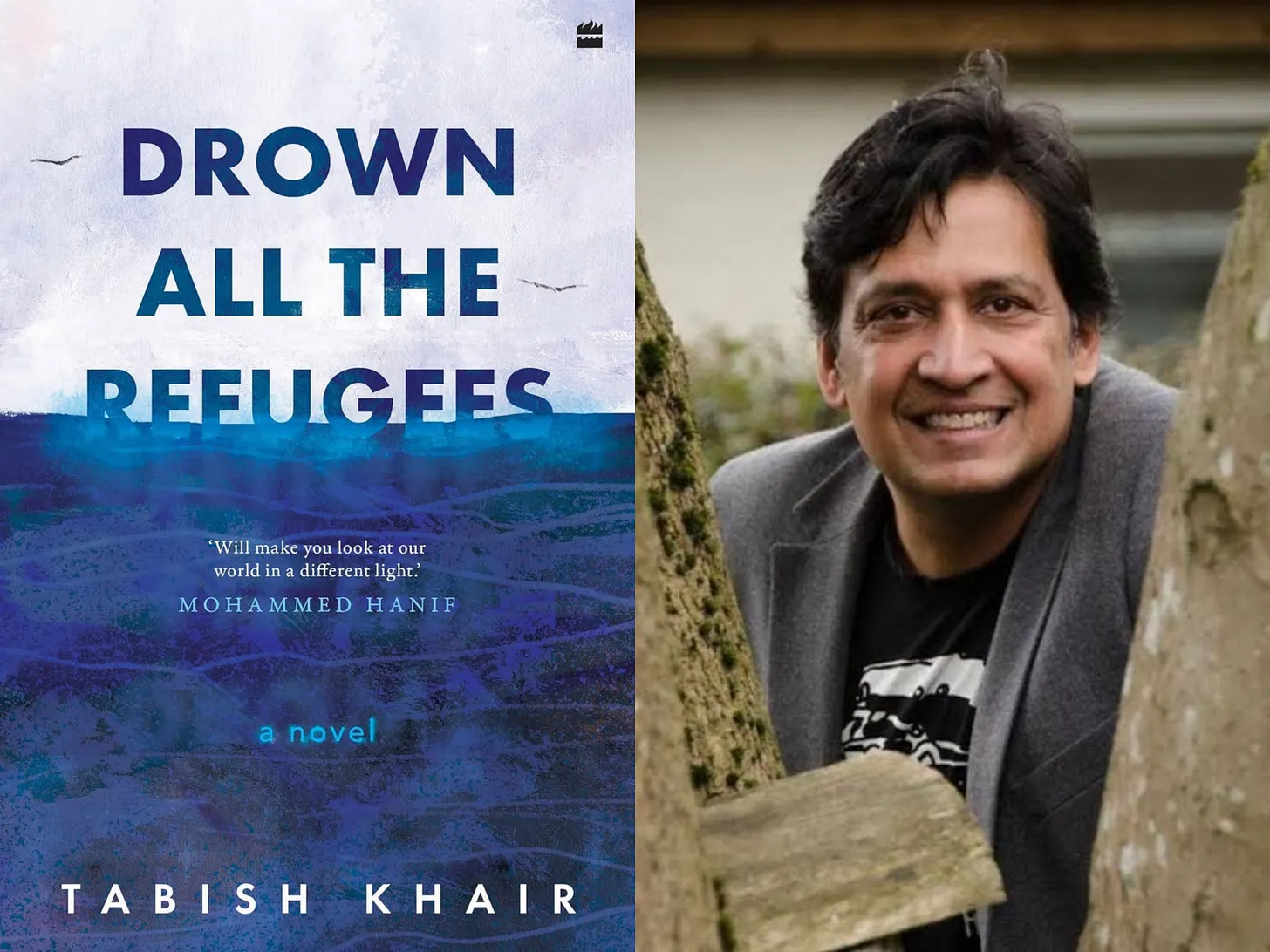
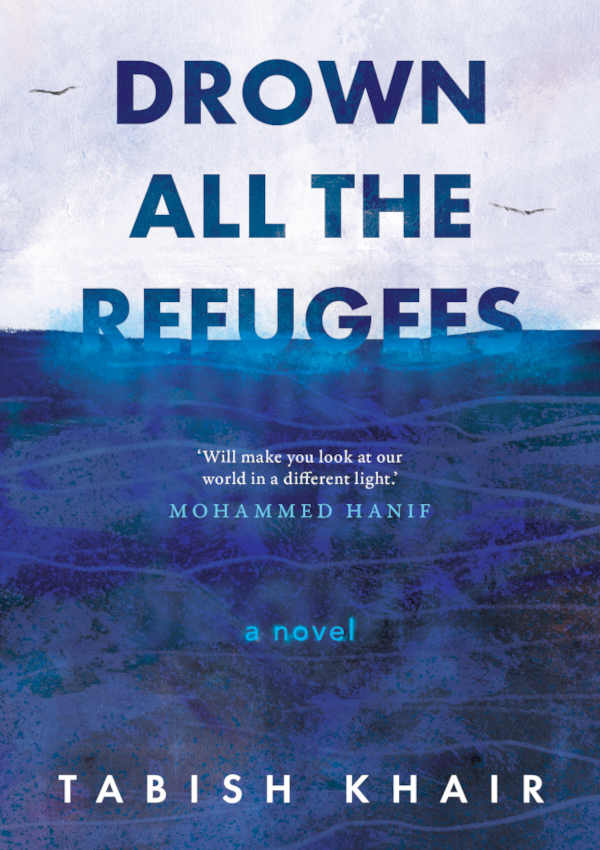
The loudest sentence in Tabish Khair’s new novel is its title. It is designed to offend, and it does. The quieter sentence comes a few pages later: “the right to move freely is secondary to the right to stay free” (p. 9). I found myself returning to this, perhaps because it puts the question of the refugee somewhere other than where liberal concern usually finds it. We meet the refugee after the home has been lost, in a boat or at a fence, inside the camp, before a tribunal. By then departure has become the fact that organises everything. Khair moves backwards. Who destroyed the possibility of remaining? Who made home uninhabitable and then treated flight as the offence? What, more painfully, happens when someone appears to come home and almost none of the person who left appears to come back with him?.
Perhaps I kept returning to that sentence because it exposed how often concern begins only after the decisive violence—the destruction of the possibility of remaining—has already taken place.
I read the book between London and Geneva. That fact entered my reading whether I wanted it to or not. In both cities, refugees were present in political speech as pressure, cost, risk, nuisance; actual people appeared less often. The public mood seemed no less hostile than the politics conducted in its name. I could close the book in a railway carriage and hear its categories repeated in a tidier language. I was not reading from outside the liberal world Khair arraigns. I live inside its assurances, and I benefit from the passport, education and professional ease that make crossing a border an ordinary act for some of us. This made the novel’s accusation harder to displace, though it did not require me to surrender judgment to it. …

Indian Express
Drown All the Refugees: Tabish Khair’s gothic novel asks if sympathy is enough
Tabish Khair’s new novel asks whether sympathy for refugees is enough, or is just another way of looking away.
Ashutosh Kumar Thakur | Sep 10, 2026 05:40 PM IST
Every age creates its outsiders. The 20th century had the stateless, the exiled and the disappeared, while the 21st has turned the refugee into one of its defining figures. Refugees are everywhere in our news, our politics and our social media feeds, yet they often remain faceless. We know the numbers but rarely the people behind them. Tabish Khair’s Drown All the Refugees enters this troubled territory with an unsettling title and opening sentence to boot. The novel is really about how we respond, or fail to respond, to the suffering of others.
Few contemporary Indian novelists have explored questions of exile, identity and belonging as consistently as Tabish Khair. From The Thing About Thugs, which revisited race and empire in Victorian London, to How to Fight Islamist Terror from the Missionary Position, Just Another Jihadi Jane, Night of Happiness and The Body by the Shore, Khair has repeatedly written about people living on the edges of society and history. His novels resist simple moral categories, asking difficult questions about prejudice, memory and power instead of offering easy answers. Drown All the Refugees brings many of these concerns together in what appears to be one of his most ambitious novels. …
The Telegraph
A spectral people
From houses, to shadows, to phantasmagorical manifestations, ‘Drown All the Refugees’ fits the bill of the Gothic novel quite snugly.
Tayana Chatterjee | 04.09.26, 09:59 AM
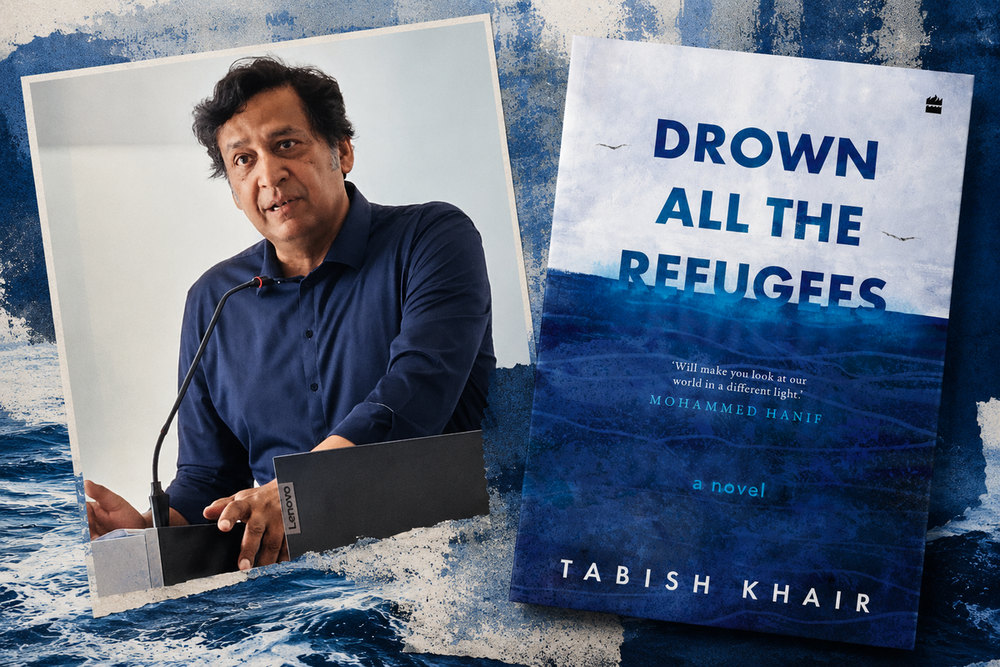
Bitterly reflective of the Gaza situation and resonating with silent cries of countless refugees who have been engulfed into the black hole of migration, Tabish Khair’s novel stands out like the refugees themselves. The deliberately fragmented narrative, featuring fractured characters, bits of whom have fallen through the cracks of displacement, loss and death, lends the work the feel of a haunting emptiness. Indeed, haunting is a key feature of this book. From houses, to shadows, to phantasmagorical manifestations, Drown All the Refugees fits the bill of the Gothic novel quite snugly.
The novel begins with its nameless narrator — a writer — at a literary convention in St. Martin. It is here, while conversing with an obviously well-established writer belonging to the Western world, that the narrator passionately screams “drown all the refugees!”, revelling in the register of shock on the “pink, lightly bearded face” of his listener. The narrator’s bitterness stems from his own experiences which he then proceeds to fill the pages with, addressing the presentation to an unnamed “m’lord”. It is as if he is making a case that supports his brutal proclamation. …
The Punch Magazine
Tabish Khair on Drown All the Refugees and why ‘home is always in a relationship to leaving it’
Tabish Khair’s latest novel, Drown All the Refugees (HarperCollins India), draws together many of his lifelong concerns. It is perhaps his most haunting work and also the sharpest thing he’s written yet. Photos courtesy of the publisher.
Nawaid Anjum | Jul 18, 2026
In a wide-ranging conversation, Tabish Khair talks about his latest novel, Drown All the Refugees, the pull of the Gothic, refugees, home, migration, love, capitalism, humour, reading, writing and why literature still matters.
Tabish Khair is one of those writers who refuses to stay in a single lane. Over the past three decades, the Ranchi-born, Denmark-based author, who turned 60 this March, has written as though the world might still be persuaded by literature, juggling with enviable ease novels, poetry, criticism and cultural theory, taking readers from the dusty lanes of small-town India to the shadows of Victorian London and the disorienting realities of migration and exile.
His books (there are so many that you can be forgiven for losing count) never let ideas overshadow characters or stories drift free of history’s inconvenient questions about power, belonging, and otherness. He’s scholarly without being stuffy, and he never forgets that a good tale should unsettle you, make you laugh in dark places and catch you off guard. …
Kabir Deb Substack
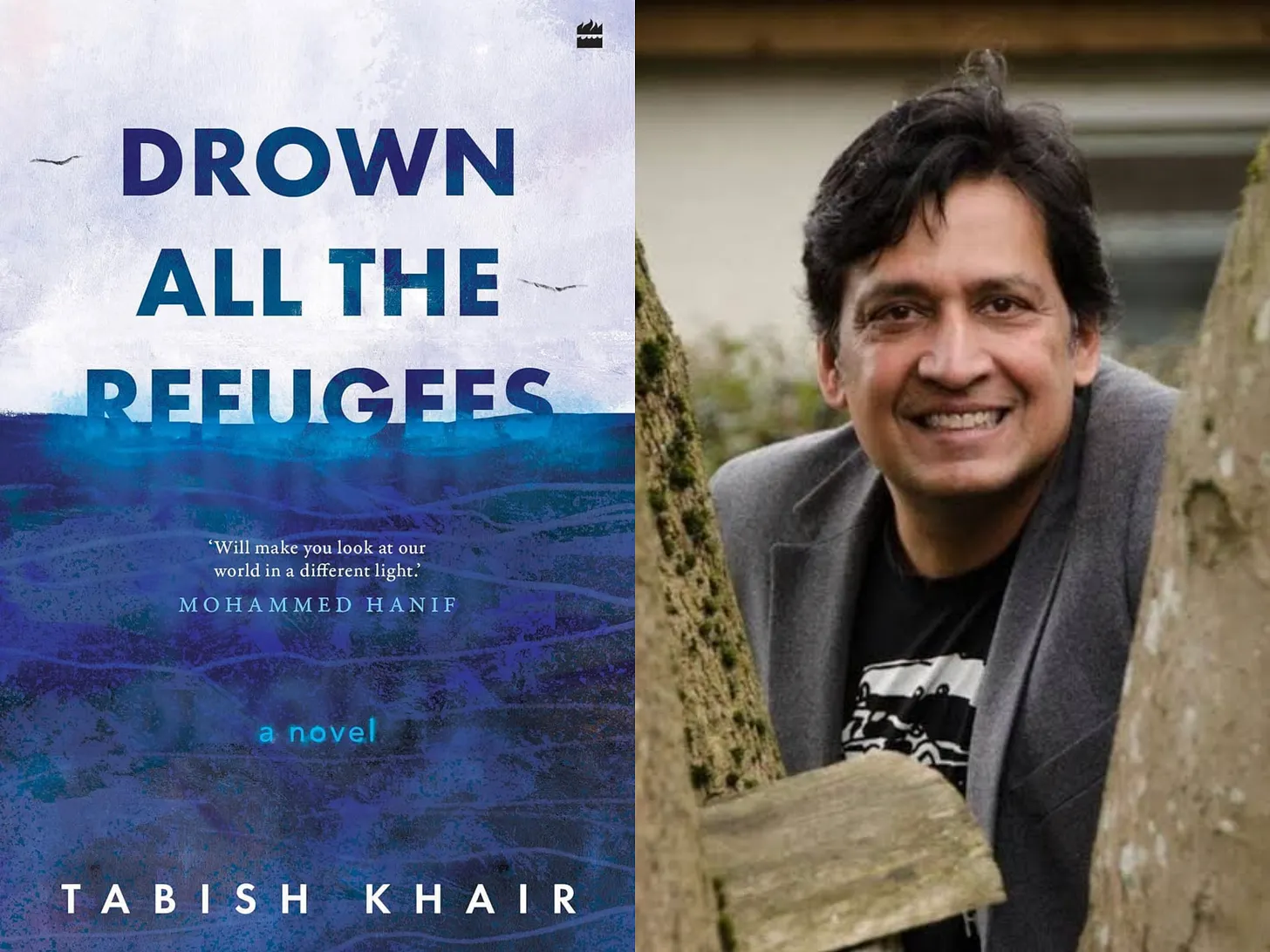
RUFFLING THE IDLE FEATHERS: AN ESSAY ON TABISH KHAIR’S “DROWN ALL THE REFUGEES”
Make the screams reach the unawakened ears.
Kabir Deb | Jul 08, 2026
Displacement, in the language of science, is elegantly uncomplicated. It is the shortest straight line between an object’s initial and final positions. It is a measurement that disregards the countless turns, pauses, diversions, and obstacles encountered along the way. While distance records the entirety of the journey, displacement concerns itself only with the beginning and the end. Such precision, however, belongs to the certainty of mathematics and physics, not to the uncertainty of human existence. Human lives do not move in straight lines, nor can they be reduced to coordinates on a map. In the humanities, displacement acquires a profoundly different meaning. It is no longer a matter of geometry but of memory, identity, belonging, and loss.
To be displaced is not merely to leave one place and arrive at another. It is to carry an invisible archive of experiences that no physical journey can measure. Every home abandoned contains a history of joys, griefs, friendships, rituals, languages, and silences that continue to inhabit those who have left, even when the place itself has become inaccessible. The destination, meanwhile, rarely offers permanence. It often reveals itself as another temporary refuge, another uncertain beginning that may eventually become the starting point of yet another departure. In this sense, displacement is less a singular event than a recurring condition of existence, an endless negotiation between the places we remember and the places we are compelled to inhabit. Unless one possesses the privilege, and sometimes the audacity, to claim a place as a permanent home, displacement becomes an enduring reality rather than an interruption
Everything suddenly seems displaced, subtle gradations erase borders, but it’s more forceful than that.
– Bret Easton Ellis
…
Outlook
In This World: Review of Tabish Khair’s ‘Drown All the Refugees’
Published at: 2 July 2026 8:02 pm by Vineetha Mokkil
Khair uses Gothic horror in his novel to paint a stark picture of the times we live in.
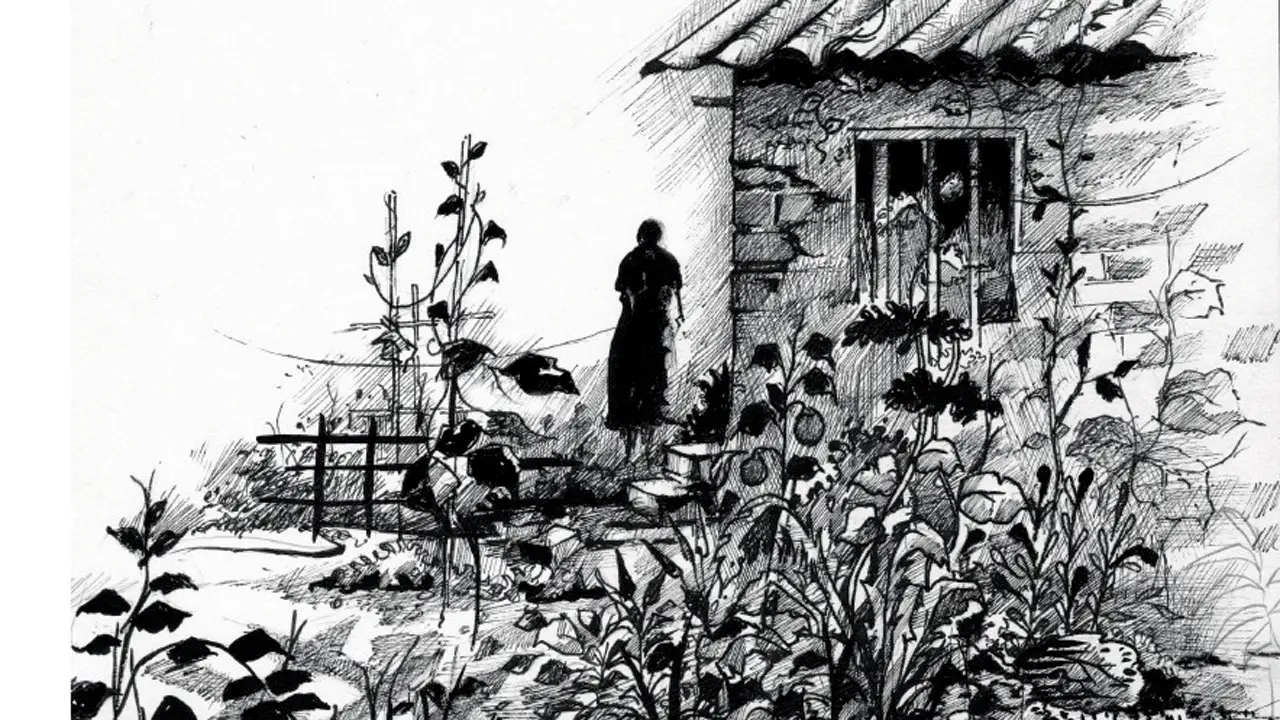
Tabish Khair’s new novel, Drown All the Refugees, is an anguished cry from the heart. Khair has explored the themes of displacement, alienation and the toll of leaving home in his works before. In Drown All the Refugees, he uses elements of Gothic horror to paint a haunting picture of the times we live in. Ours is a world in which refugees and immigrants are either forgotten or left to fend for themselves in the most brutal circumstances. Spectres haunt the landscape of Khair’s novel. Those who leave dream of home; those who are left behind mourn the ones who fled, the ones they lost. …
Midday
Author Tabish Khair: ‘We’re watching, and it isn’t affecting us’
30 June, 2026 09:09 AM IST | Mumbai | Nandini Varma
Acclaimed author Tabish Khair addresses the global issue of migration and its fallout in his new book that is set in a Gothic universe.
Man Asian Literary Prize (2010) shortlisted author Tabish Khair was in the city as part of his book tour. We caught up with him to discuss his new release, Drown All the Refugees (HarperCollins India), which explores displacement through Gothic tropes. …

Frontline
Commercialisation has already done more damage to literature than AI: Tabish Khair
Published : Jun 28, 2026 11:54 IST – 11 MINS READ by Majid Maqbool
The award-winning writer says AI will mostly affect commercially driven fiction, while literature that asks difficult questions faces a deeper challenge from the market.
In Tabish Khair’s recently published novel Drown All the Refugees (HarperCollins India), the narrator shouts “Drown all the refugees” at a crowded literary gathering as the novel opens. The outburst springs from the anguish of his exiled life: his lover Abdul, a Palestinian, is dead, while his childhood friend Pedro, who crossed borders in search of a better life, never returned. The novel follows the narrator’s obsession as he confronts loss, absence, and the trauma of displacement. …

Grazia
Tabish Khair’s Drown All The Refugees Turns Migration Into A Gothic Mystery
by Shweta Sunny Published on Jun 26, 2026, 14:20 IST
Tabish Khair’s Drown All The Refugees blends Gothic fiction and migration narratives in a haunting tale of displacement, memory and hope.
Set in Northeast India, the book explores displacement, grief and belonging through a supernatural narrative
What happens when someone returns home after crossing borders, only to come back unrecognisable? In Drown All The Refugees, Tabish Khair takes that unsettling question and transforms it into a haunting Gothic tale about migration, memory and the human cost of displacement. …