
Money Control
‘Empathy is a cardinal human attribute, but it is not a political tool. Empathy involves identification, but politics involves difference’
Jaya Bhattacharji Rose | July 08, 2026 / 20:27 IST
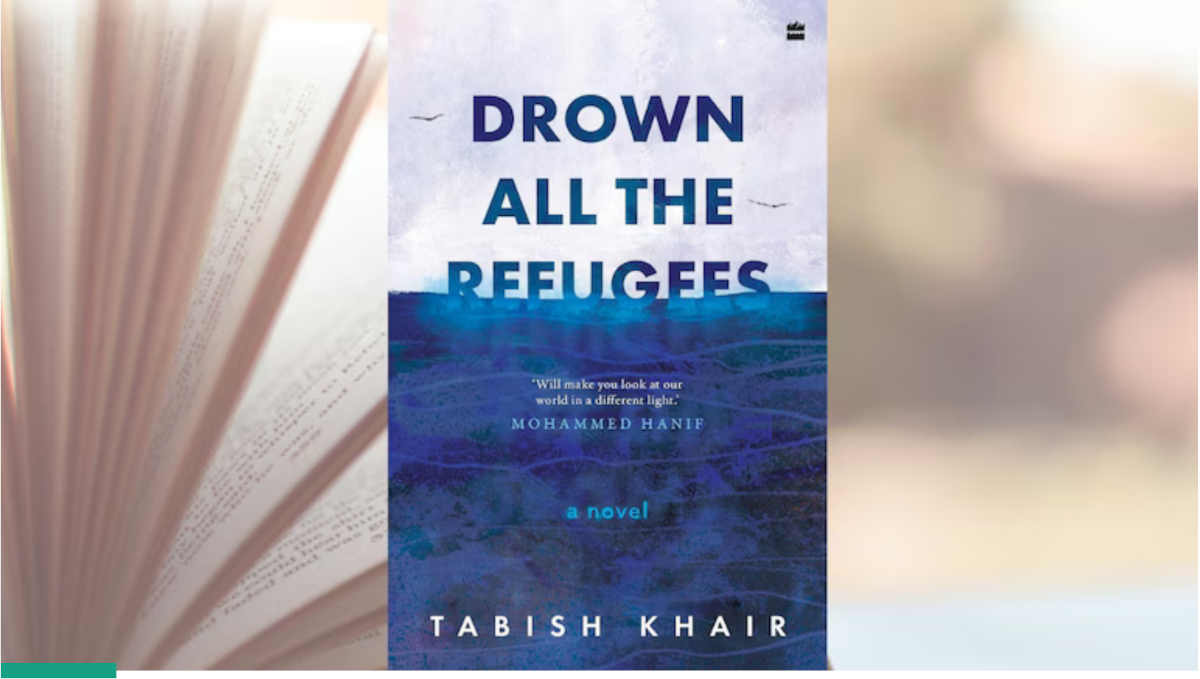
Tabish Khair’s latest work of literary fiction, Drown All The Refugees, is a work of Gothic horror. In an interview to Moneycontrol, he explains his journey from an idea to the process of transforming it into a novel and the trigger for his latest effort.
Drown all the refugees is a novel that uses multiple literary techniques to tell a heartbreaking story. One is the story itself. About the narrator, his boyfriend Abdul who was a Palestinian, and his childhood best friend Pedro who crossed India’s borders illegally in search of a better life. Unfortunately for the narrator, Abdul is dead and Pedro’s whereabouts are now a mystery. That is, until Maria, the narrator’s childhood nurse and Pedro’s mother, turns to the occult to bring back her son. The person she recovers is not her exuberant young boy, but someone who is a husk of himself. At another level it is about displacement and the sense of being in limbo.
Unusually, this literary fiction has been illustrated by Vikram Nayak. In a geo-politically fractured world where everyone seems to exist in limbo, Tabish Khair pushes those boundaries of existence just enough for the reader to speculate about the “what if” scenarios and attempt to look at life ahead — because there always is. Even as Pedro ascertains. “I cannot return entire. I went away a long time back….I cannot return as myself.” He means it literally within the context of the story as he is an apparition speaking to his flesh and blood mother, but it works metaphorically too. The impact of migration and displacement upon an individual changes them forever. This is a novel for keeps. Read it.
This interview was conducted via email and has been lightly edited.
What was the genesis of Drown all the Refugees?
TK: Mostly I let my novel ideas gestate for a few months, maybe longer. If at the end of that period, I still feel driven by the idea and the story, then I start writing. In this case, it was an idea that was with me for more than a year, maybe two. Like any person who reads newspapers and watches the news, I could not help noticing the growing callousness with which we treat refugees, economic migrants, the homeless, those different from us. Then the genocidal tragedy of Gaza began, and our manufactured blindness to it, and I felt impelled to start writing. What happens when one leaves in a precarious manner? What happens to the split – in the person who leaves, the people who remain and between us and the shadows we cast or ignore. This brought me to the matter of shadows and substances, and hence a potentially gothic story.
The Hindu
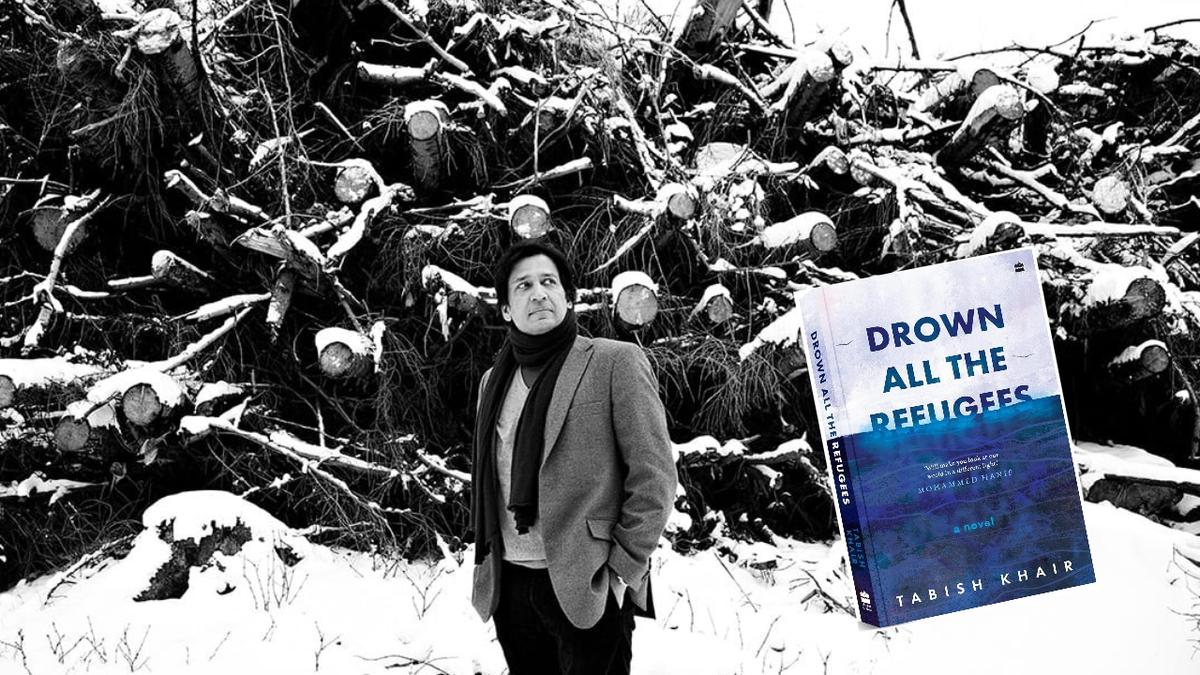
Tabish Khair in conversation with Annie Zaidi on his new novel, Drown All the Refugees
Updated – July 07, 2026 01:34 pm IST | Annie Zaidi
The author-academic on displacement and why literature must provoke to remain truthful